

At a procurement innovation conference in the United Kingdom last year, Amazon Business, SAP, and Oracle were in attendance. So was a Nigerian company.
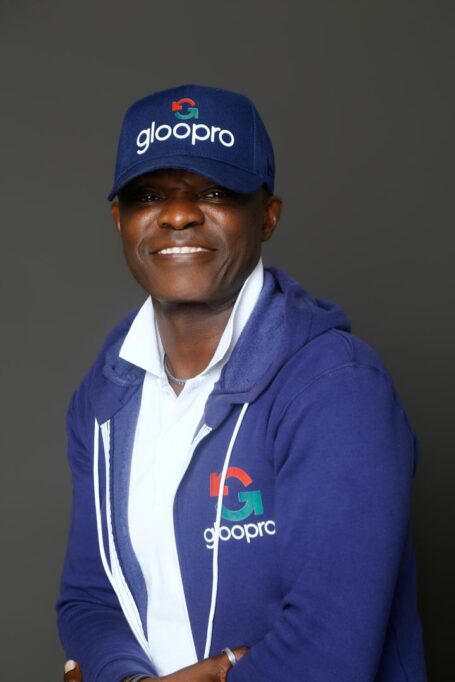
“Save for a representative from the Lagos State government, we were the only African company in the room,” Gloopro CEO, Olumide “D.O’ Olusanya recalls.
Olusanya and his team came back and spent months looking for an equivalent forum on the continent. There wasn’t one. So they decided to build one.
Set to hold on May 26, 2026, the Digital Procurement Africa (DPA) Summit is invite-only and deliberately intimate. Olusanya describes it as a frank conversation about what is working, what is not, and what has to change.
But the more interesting question is why it didn’t already exist.
Procurement is boring
In most large Nigerian enterprises, procurement is a back-office function. It’s where purchase requests go to accumulate approvals, where vendor relationships are managed through personal contacts and phone calls, and where nobody looks until something goes wrong. Finance owns the budget. Operations owns the delivery. Procurement sits in the middle, mostly invisible, often on spreadsheets.
That invisibility is expensive.
“Large enterprises are losing millions every day to hidden tail-spend,” Olusanya said at a pre-summit press briefing this week.
Tail-spend refers to manual processes, and fragmented systems that provide no real-time visibility into what is actually being spent or why.

Victoria Fakiya – Senior Writer
Techpoint Digest
Stop struggling to find your tech career path
Discover in-demand tech skills and build a standout portfolio in this FREE 5-day email course
The scale of what’s recoverable is not theoretical. Nigeria’s Bureau of Public Procurement reported earlier this year that procurement reforms saved the Federal Government over ₦1.1 trillion in 2025, through price benchmarking, stricter compliance enforcement, and tightened contract documentation.
That’s one agency, one year, and predominantly manual reforms. The private sector, which runs procurement with even less oversight, hasn’t started that conversation yet.
The AI problem underneath
There is a more fundamental issue, and it connects procurement digitisation to a much larger conversation.
Every serious enterprise agenda in Nigeria right now has AI somewhere in it. What that agenda almost never includes is the prerequisite question: what data does your AI have to work with?
Olusanya is direct about this.
“AI cannot have any impact in an environment where you don’t even have the data available. The first step that needs to happen is that this groundwork needs to first be built.”
Procurement, when properly digitalised, is that groundwork. It’s the function that generates the structured transaction data — supplier pricing histories, spend patterns, approval flows, delivery records — that makes AI applications in enterprise operations meaningful.
Without it, you can’t run anomaly detection on purchasing behaviour, benchmark prices at scale or build a supplier risk model worth trusting. You’re building AI strategy on top of a data vacuum.
The DPA Summit is, in part, an attempt to make this argument to the people who need to hear it. The C-suites, not IT teams.
Why global software hasn’t solved this
The intuitive response is that large enterprises already run ERP platforms like SAP, Oracle, Unifier. These are the same systems used by the world’s largest companies.
But those systems were designed for environments where suppliers are formal, structured, and already digital. Vendors in those markets have electronic invoices. They’re catalogued. There’s a data trail from the first transaction.
In Nigeria, and across much of sub-Saharan Africa, a significant portion of the supplier ecosystem that large enterprises depend on operates informally. No e-invoicing. No structured pricing history. No standardised onboarding.
The multinational running SAP in Lagos is trying to connect a global enterprise platform to a supply chain that was never built to connect to it. There is, as Olusanya puts it, “no meeting point.”
The result is that companies pay for expensive ERP licences, run manual workarounds to bridge the gap, and end up with multiple human touchpoints, inconsistent records, and no single source of truth.. Exactly the conditions fraud needs.
This is not a software problem that a software update will fix. It’s a structural problem that requires a local solution. Which is part of what the summit is there to talk about.
What DPA is actually trying to do
Themed “Accelerating Procurement Transformation for Large Enterprises in the Digital Era,” the summit’s agenda covers the hidden costs of manual procurement systems, reclaiming executive time through automation, and using digital procurement as a governance tool for tail-spend; the low-value, high-frequency purchases that eat budget and almost never get scrutinised.
But the format is as deliberate as the content. Rather than panels where speakers summarise positions and take polite questions, DPA is structured around roundtables where procurement heads can compare what is genuinely working in their organisations with peers who have the same problems. Candour, as the organisers put it, over showcase.
The underlying bet is that if you create the right environment, the people in that room will convince each other faster than any conference keynote ever could.
And if no one else is creating that environment in Africa, Gloopro gets to.
It’s a long-term play. But then, so is building the data infrastructure that African enterprise AI is going to need. And right now, almost nobody is talking about the layer underneath.