

Shalom,
Victoria from Techpoint here,
Here’s what I’ve got for you today:
- M-KOPA unlocks $82M in credit across Ghana
- Airtel and Starlink begin satellite phone tests in Uganda
- Meta is cutting 8,000 jobs globally
M-KOPA unlocks $82M in credit across Ghana
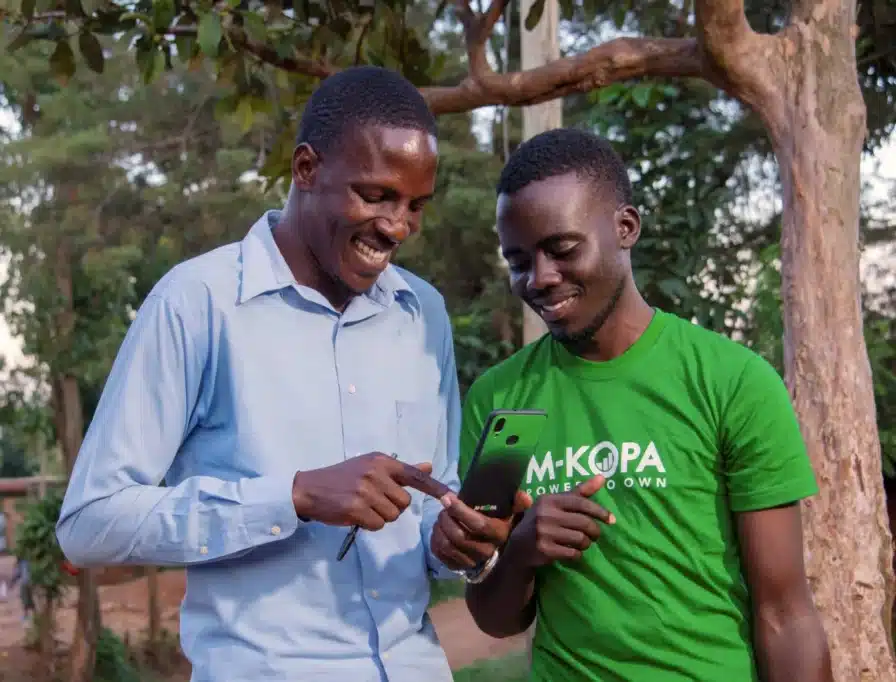
M-KOPA may sell smartphones, but in Ghana, the company is quietly becoming something much bigger. Per its latest Impact Report published yesterday, May 20, 2026, the fintech has unlocked more than GHS 1.2 billion (roughly $82 million) in credit for over 550,000 customers since entering Ghana in 2021. What stands out in the report isn’t just the number of phones sold but how those phones are turning into gateways for health insurance, digital finance, and income generation for low-income earners. Through M-KOPA’s partnership with Turaco, 67% of insured customers accessed health insurance for the very first time, while 43% of women said they specifically chose an M-KOPA smartphone because it came bundled with health cover.
The real shift happened in January 2025 when M-KOPA launched its “More than a Phone” platform in Ghana. Instead of simply financing devices, the company started bundling smartphones with health insurance, affordable data plans, and device protection directly into customers’ instalment payments. The result was explosive growth. Sales reportedly jumped fourfold as the company expanded across all 16 regions of Ghana using a sales network of more than 3,000 agents. For many users, the smartphone itself became less important than the services attached to it. The report found that 44% of customers accessed a formal product or service for the first time through M-KOPA, while 36% said the financed smartphone was the first phone they had ever owned.
The economic impact is where things get especially interesting. More than half of customers now use their phones to generate income, and 54% say they earn more money after purchasing the device. About 76% reported an improvement in their overall quality of life. That matters because smartphone affordability remains one of Africa’s biggest digital barriers. According to GSMA estimates, an entry-level smartphone can cost up to 95% of a low-income earner’s monthly wages in sub-Saharan Africa, leaving millions effectively locked out of digital banking, e-commerce, online education, and mobile health services. M-KOPA’s “buy now, pay daily” model is essentially trying to break that barrier one instalment at a time.
The company’s expansion in Ghana has been surprisingly methodical. M-KOPA quietly entered the market in 2021 with just 30 agents operating around Accra. By the end of 2023, it officially launched nationwide after reaching 100,000 customers and unlocking about $10 million in digital credit. Around the same period, the company secured $250 million in debt and equity funding to accelerate expansion across Ghana, Nigeria, South Africa, and Uganda. By 2025, M-KOPA said it was onboarding a new customer somewhere in Africa every nine seconds, with growth outside Kenya beginning to outpace its home market for the first time.
What the Ghana report really shows is that M-KOPA is no longer just a hardware financing startup. The company started years ago selling solar systems, then pivoted into smartphones, but it now increasingly looks like a full financial services platform disguised as a device company. In 2024 alone, M-KOPA Ghana contributed roughly GHS 46 million (about $3.1 million) in taxes and spent over GHS 382 million ($26 million) on local procurement. Across Africa, the company has now disbursed more than $2 billion in credit since 2011 and reached profitability in 2024 with annual revenue climbing to $416 million. The formula appears to be working: finance a smartphone, attach insurance and digital services to it, collect micropayments daily, and gradually pull millions of low-income Africans into the formal economy.
Airtel and Starlink begin satellite phone tests in Uganda

Africa’s telecom battle is slowly moving from cell towers to space. Just days after Uganda gave Starlink a provisional operating licence, Airtel Uganda confirmed it has already started testing Starlink’s Direct-to-Cell satellite service. The technology allows ordinary 4G smartphones to connect directly to low-earth-orbit satellites without relying on nearby towers, fibre cables, or even Starlink dishes. Airtel Uganda CEO Soumendra Sahu described the trials as the beginning of testing “highly advanced technology” designed to improve smartphone connectivity in places traditional networks struggle to reach.

Victoria Fakiya – Senior Writer
Techpoint Digest
Stop struggling to find your tech career path
Discover in-demand tech skills and build a standout portfolio in this FREE 5-day email course
The tests follow the same model Airtel and SpaceX quietly rolled out in Kenya earlier this year. There, regular smartphones connected directly to Starlink’s satellite network in areas with zero terrestrial mobile coverage, supporting services like WhatsApp calls, Facebook Messenger, maps, and Airtel financial transactions. Airtel Africa CEO Sunil Taldar has already claimed the system could deliver speeds up to 20 times faster than older satellite-to-mobile technology. Uganda is now the second African country where the tests are happening live, and Airtel clearly wants this to become much bigger across its 14 African markets.
What makes this shift so important is that it completely changes the economics of connectivity in rural Africa. Building telecom towers in remote regions is extremely expensive, often costing hundreds of thousands of dollars while serving relatively small populations. Airtel’s direct-to-cell approach basically removes the need for those towers entirely. Your phone itself becomes the satellite terminal. That puts Airtel and Starlink on a very different path from companies like Safaricom, which are mostly using satellites to strengthen remote towers rather than bypassing infrastructure altogether. One model upgrades the old telecom system. The other threatens to replace parts of it entirely.
The bigger picture is that Africa’s telecom industry is now turning into a satellite arms race. Airtel is partnering with Starlink. Vodacom is testing satellite connectivity with Amazon’s Project Kuiper and AST SpaceMobile. MTN is experimenting with multiple satellite providers, including OneWeb and Lynk Global. Everyone is chasing the same opportunity: hundreds of millions of Africans who still lack reliable Internet access. The market for satellite mobile services is projected to explode over the next few years, and Africa is quickly becoming one of the most important battlegrounds. Uganda’s tests may look small today, but they are part of a much larger fight over who controls the continent’s next generation of connectivity
Meta is cutting 8,000 jobs globally

Meta’s massive AI restructuring is no longer just a Silicon Valley story. The impact has already landed in Nairobi. On April 23, 2026, Meta told employees it would cut about 10% of its global workforce — roughly 8,000 jobs — starting yesterday, May 20, while also scrapping plans to hire for another 6,000 open roles. At the same time, the company is moving aggressively in the opposite direction on AI, reassigning around 7,000 workers into AI-focused teams and ramping up spending on AI infrastructure to as much as $145 billion this year.
But Africa had already felt the first real shockwave days before the global announcement even dropped. On April 16, Sama, Meta’s longtime outsourcing partner in Kenya, announced it was laying off 1,108 workers in Nairobi after losing a major Meta contract tied to AI data labelling and content processing.
The layoffs at Sama are probably the clearest example yet of what AI restructuring looks like for African digital workers. Most of the affected employees were working on tasks that helped train, organise, or moderate Meta’s systems behind the scenes, exactly the kind of repetitive digital labour AI companies increasingly want machines to handle themselves. Sama said it tried to save the contract but failed. And the timing matters: just days before the cuts, Swedish media investigations had raised fresh concerns about sensitive user content from Meta’s smart glasses allegedly being reviewed by outsourced workers in Kenya without clear user awareness. Even without Meta saying it directly, the message is becoming obvious: the company wants fewer humans involved in the messy backend work of AI products.
Kenya has spent years branding itself as a hub for outsourced digital work, with firms like Sama helping create thousands of jobs in content moderation, data labelling, and AI support services for major US tech companies. But the industry was always vulnerable to decisions made abroad. A single strategic shift in Silicon Valley, particularly from companies like Meta, can rapidly wipe out jobs in Nairobi. The pressure is growing as the global tech sector cuts labour costs and pivots more aggressively toward automation. More than 92,000 tech workers have reportedly lost their jobs worldwide in 2026 so far, as companies channel investment into AI systems rather than human-heavy operations.
The relationship between Meta and Sama was also controversial long before these layoffs. Since 2019, Sama workers in Kenya have been moderating some of Facebook’s most disturbing content across Africa — graphic violence, hate speech, extremist material, and traumatic videos. Former workers accused the company of poor pay, psychological harm, and exploitative conditions. Lawsuits followed. In 2023, nearly 200 former moderators sued Meta and Sama in Kenya over alleged unfair dismissal and labour abuses, seeking billions in damages. Around the same time, Sama exited content moderation entirely and pivoted toward AI data labelling instead. Ironically, that AI-focused business is now also being phased out as Meta automates more of the work internally.
Africa is increasingly facing the downside of the AI boom, as global tech companies invest heavily in artificial intelligence while cutting the human jobs that helped build those systems. For many African workers in outsourcing and digital support roles, the threat is growing that AI could replace the very jobs that first connected them to the global tech economy. For Meta, ongoing lawsuits in Kenya also continue to highlight the unresolved human cost behind its outsourced moderation operations, even as the company shifts further toward automation.
In case you missed it
What I’m watching
Opportunities
- Qore is hiring for several roles. Apply here.
- Didii is recruiting for several roles. Apply here,
- Clarus Technologies, in partnership with Norrsken East Africa, has launched Scale Velocity, a go-to-market accelerator aimed at helping high-potential startups across East Africa refine growth, strengthen commercial systems, and scale faster. Applications for the first cohort are now open, and founders are encouraged to apply. Apply here.
- Moniepoint is recruiting for several roles. Apply here.
- Flutterwave is hiring for several roles in Nigeria, the UK, and the US. Apply here.
- As one of Techpoint Africa’s most engaged readers, you have a direct hand in shaping what we publish next. Take our quick, 3-minute survey to tell us the stories and features you value most. Your responses are anonymous, and your feedback will help guide our editorial focus in the months ahead. Fill the survey here.
- Moniepoint is hiring for over 100 roles. Apply here.
- Building a startup can feel isolating, but with Equity Merchants CommunityConnect? You can network with fellow founders, experts, and investors, gaining valuable insights and exclusive resources to help you grow your business. Click here to join.
- To pitch your startup or product to a live audience, check out this link.
- Follow Techpoint Africa’s WhatsApp channel to stay on top of the latest trends and news in the African tech space here.
Have a superb Thursday!
Victoria Fakiya for Techpoint Africa