

Sain bainuu,
Victoria from Techpoint here,
Here’s what I’ve got for you today:
- Jumia cuts 200 jobs, bets big on AI
- Ghana just buried its 5G monopoly experiment
- Kenya just targeted M-Pesa with a new 16% VAT
Jumia to cut 200 jobs, bets big on AI

Jumia just made one of its clearest statements yet about where the company is headed next: fewer people, more AI. On May 14, 2026, Africa’s biggest eCommerce platform announced plans to cut at least 200 full-time jobs over the next two quarters as it rolls out AI tools across key parts of the business. CEO Francis Dufay was pretty blunt about it during an interview with Bloomberg from Abidjan.
Jumia, he said, simply cannot survive by charging huge margins to customers earning around $200 to $300 monthly across markets like Nigeria, Kenya, and Côte d’Ivoire. So the company’s strategy now is to become “extremely efficient, cheap, and lean.” That efficiency drive is already touching logistics, customer support, finance, cybersecurity, seller management, and even software development, where AI tools are now handling tasks that previously needed entire human teams.
What makes this round of layoffs different from previous ones is that the numbers are finally starting to move in Jumia’s favour. After years of losses, restructuring, and investor frustration, the company is beginning to show signs of an actual turnaround. Q1 2026 revenue climbed to $50.6 million, while the company maintained a cash position of $62.6 million. Earlier, in Q3 2025, revenue rose 25% year-on-year to $45.6 million, with orders jumping 34%. Nigeria remains the company’s biggest growth engine, with consumer demand reportedly growing more than 40%, alongside a 43% increase in gross merchandise volume. Cost-cutting is also visibly working. Administrative costs are down, technology expenses are shrinking, and Jumia’s leaner structure is finally starting to reflect on the balance sheet.
Still, there’s a human side to these numbers that’s hard to ignore. Since 2022, Jumia’s workforce has collapsed from more than 4,300 employees to under 2,000 by March 2026. Nigeria alone went from over 1,100 staff to just 361 workers by the end of 2025. For employees inside the company, restructuring has become less of a temporary phase and more of a recurring cycle. Every year seems to come with another wave of cuts, another market exit, another strategic reset. This latest chapter just happens to come wrapped in the language of artificial intelligence. And unlike earlier restructuring rounds blamed on inflation, currency volatility, or investor pressure, this one openly says the machines are simply cheaper and more scalable.
Jumia has basically spent the last decade in survival mode after launching in 2012 and going public in 2019 with big “Amazon of Africa” expectations. Since then, it’s downsized heavily, shutting down services like food delivery in multiple countries, exiting some markets completely, such as Algeria, cutting jobs, and reshaping leadership to be closer to African operations. The focus has mostly been on staying afloat long enough to eventually turn a profit.
Now it’s betting that AI could help it reach profitability by around 2026, but there’s still a major risk: affordability. Rising costs for smartphones, driven by supply chain issues, energy prices, and global tensions, could make it harder for people to access eCommerce in the first place. Since most users rely on low-cost phones, higher device prices could reduce online shopping, hurt sellers, and ultimately squeeze platforms like Jumia, even if its internal finances improve.

Victoria Fakiya – Senior Writer
Techpoint Digest
Stop struggling to find your tech career path
Discover in-demand tech skills and build a standout portfolio in this FREE 5-day email course
Ghana just buried its 5G monopoly experiment
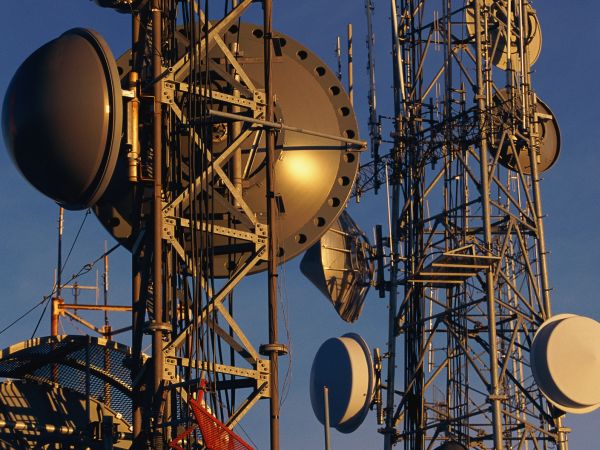
Ghana is officially moving away from its original 5G rollout plan after deciding the NGIC model wasn’t working. The government has now approved open bidding for 5G spectrum in 2026, instead of leaving rollout to a single wholesale provider. Back in 2024, Next-Gen InfraCo got an exclusive 10-year licence to build a shared national 5G network, but nearly two years later, the rollout had badly stalled. The company had reportedly managed only 49 sites, fallen behind on its $125 million licence payments, and lost its exclusivity in February 2026 before most Ghanaians had even properly experienced the service.
Ghana says the new 5G auction system is designed to boost competition, speed up rollout, and prevent companies from sitting on unused spectrum. Officials also want to avoid repeating the 2015 4G auction, where licences were priced at about $67.5 million per block, so high that only MTN Ghana secured spectrum. This time, the priority is building working networks and improving service quality rather than simply raising as much money as possible for the government.
MTN Ghana already dominates Ghana’s Internet market with about 79% share and more than 22 million users, so regulators are worried 5G could end up reinforcing that dominance if the auction rules are not carefully structured. The government says it wants all telecom operators to launch 5G around the same time to avoid another one-player market, but that may be difficult in practice. Rival operators like Telecel Group and AT Ghana are already dealing with network quality challenges ahead of their merger, while even MTN has questioned whether enough people currently own 5G-compatible devices to support a major rollout.
Next-Gen InfraCo was meant to be Ghana’s big experiment with a shared national 4G and 5G network, where telecom operators would use one common infrastructure instead of building separate systems. But the model quickly ran into trouble. NGIC reportedly paid only a small portion of its $125 million licence fee, struggled to attract operators onto the network, and faced criticism for overstating how active its 5G rollout really was when most consumers still couldn’t access the service. Even MTN Ghana questioned whether there was enough demand for 5G yet. By May 2026, the government had effectively abandoned the exclusivity model altogether.
Now, Ghana wants 70% 5G population coverage by its 70th independence anniversary in March 2027, but the timeline is extremely tight. The country still needs to finalise auction rules, sell spectrum, approve operators, and roll out infrastructure nationwide in less than a year. Officials understand what failed with NGIC, but the challenge now is avoiding a repeat of older problems, too, especially pricing the spectrum so high that only a few players can compete, leading again to slow rollout and market concentration.
Kenya just targeted M-Pesa with a new 16% VAT

Kenya’s Finance Bill 2026 has gone after one of the country’s most important pieces of digital infrastructure: mobile money. Published on May 14, the bill proposes a 16% VAT on payment service providers, including Safaricom’s M-Pesa, Airtel Africa’s Airtel Money, Pesapal, and Kenswitch. The government says the tax is meant for the companies, not users, but most people expect customers will still end up paying through higher transaction fees. In reality, once transfer costs go up, it’s everyday Kenyans who feel the impact.
For context, M-Pesa is no longer just a fintech success story; it functions like national financial infrastructure. In the year ending March 2026, Kenyans moved KSh 41.7 trillion through M-Pesa across 46.4 billion transactions. That transaction value is almost three times Kenya’s GDP. Revenue from the platform reached KSh 182.7 billion, making it the single biggest business unit inside Safaricom and responsible for nearly half of the company’s service revenue.
Kenya’s traditional banking services — ATM withdrawals, telegraphic transfers, cheque processing, foreign exchange, loan underwriting, and securities issuance — mostly avoid VAT because they’re classified as financial services, but M-Pesa falls under payment providers, so it doesn’t get the same protection. Per reports, that creates an unfair setup where services used more by wealthier bank customers stay tax-friendly, while mobile money, heavily relied on by lower-income Kenyans, gets hit harder. And since people now use M-Pesa more for daily small payments than big transfers, any extra costs are likely to hurt ordinary users the most, especially households already depending on services like Fuliza, which now serves 17.7 million users, to get by.
Kenya has been debating for years whether mobile money should get the same VAT exemptions as traditional financial services. Courts recently sided against broader taxation, with rulings suggesting digital financial transactions can qualify as exempt even without a banking licence. But the Finance Bill 2026 seems designed to sidestep those decisions and explicitly tax mobile money transfers anyway. Some products tied to banks, like Fuliza and M-Shwari, would still stay exempt, but the basic sending and receiving of money through platforms like M-Pesa would likely become more expensive.
The Finance Bill 2026 doesn’t stop at mobile money. It also proposes new taxes on smartphones, digital loans, card network fees, and stricter crypto reporting rules. Taken together, it looks like the government is aggressively targeting the digital economy for revenue. Critics argue that Kenya risks making digital financial services more expensive, even though those systems helped bring millions into the financial system in the first place, while older traditional banking structures stay relatively protected. With memories of the huge backlash against Finance Bill 2024 still fresh, lawmakers already know these kinds of taxes can quickly become politically explosive once ordinary people start feeling the costs.
In case you missed it
What I’m watching
Opportunities
- Qore is hiring for several roles. Apply here.
- Didii is recruiting for several roles. Apply here,
- Clarus Technologies, in partnership with Norrsken East Africa, has launched Scale Velocity, a go-to-market accelerator aimed at helping high-potential startups across East Africa refine growth, strengthen commercial systems, and scale faster. Applications for the first cohort are now open, and founders are encouraged to apply. Apply here.
- Moniepoint is recruiting for several roles. Apply here.
- Flutterwave is hiring for several roles in Nigeria, the UK, and the US. Apply here.
- As one of Techpoint Africa’s most engaged readers, you have a direct hand in shaping what we publish next. Take our quick, 3-minute survey to tell us the stories and features you value most. Your responses are anonymous, and your feedback will help guide our editorial focus in the months ahead. Fill the survey here.
- Moniepoint is hiring for over 100 roles. Apply here.
- Building a startup can feel isolating, but with Equity Merchants CommunityConnect? You can network with fellow founders, experts, and investors, gaining valuable insights and exclusive resources to help you grow your business. Click here to join.
- To pitch your startup or product to a live audience, check out this link.
- Follow Techpoint Africa’s WhatsApp channel to stay on top of the latest trends and news in the African tech space here.
Have a fun weekend!
Victoria Fakiya for Techpoint Africa