

Ahoj,
Victoria from Techpoint here,
Here’s what I’ve got for you today:
- Kenya gives Safaricom a 25-year lifeline
- Your NIN is now your tax ID in Nigeria
- Bolt wants 500 EVs on South African roads
Kenya gives Safaricom a 25-year lifeline amid Vodacom court drama
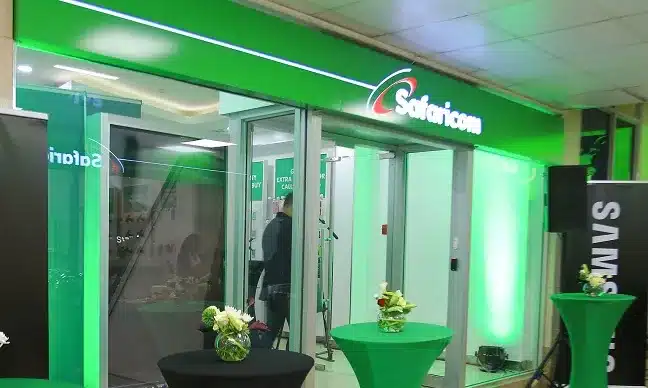
Safaricom has just done something most telecom companies spend decades trying to secure: it locked in regulatory certainty for the next 25 years. On May 18, 2026, Kenya’s biggest telecom operator announced that it had received a fresh 25-year operating licence from the Communications Authority under Kenya’s new Unified Licensing Framework.
That replaces the temporary two-year permit Safaricom had been operating under while regulators and telecom operators argued over spectrum fees, service outage penalties, and how Kenya’s future telecom licensing system should work. The symbolism is hard to miss, too. Safaricom launched in 2000, and this new licence now effectively carries the company all the way to its 50th anniversary.
Behind the excitement is a much bigger story about rising telecom costs and regulation in Kenya. Safaricom’s licence expenses have already jumped sharply, and with the country moving toward a more competitive auction-style system for spectrum rights, future licences could become far more expensive. By securing a 25-year deal now, Safaricom has basically protected itself from years of regulatory uncertainty. That stability matters because the company is no longer just a telecom operator, with over 46 million users, M-Pesa, fibre expansion, data centres, and its Ethiopian growth plans. Safaricom is making huge long-term investments that depend heavily on predictable regulation and investor confidence.
What makes the timing even more politically sensitive is that this licence lands right in the middle of a bitter ownership fight over Safaricom itself. Kenya’s High Court has now refused to lift orders blocking the planned sale of a 15% government stake in Safaricom to South Africa’s Vodacom Group. The ruling, delivered by a three-judge bench yesterday, also rejected attempts by Vodacom and its parent company, Vodafone, to remove themselves from the case.
That means the controversial KSh 205 billion ($1.6 billion) transaction remains frozen for now. If the deal eventually goes through, Vodacom’s ownership in Safaricom would rise from 40% to 55%, effectively giving the South African telecom giant majority control of Kenya’s most influential telecom and fintech company.
The Kenyan government says selling part of its stake in Safaricom is meant to raise cash and help the company expand further into Ethiopia and fintech through stronger ties with Vodacom, but critics think Kenya may be selling one of its most valuable assets too cheaply. The deal has already faced court challenges from activists and politicians who say the process lacked transparency and public participation, especially around the KSh 34-per-share valuation.

Victoria Fakiya – Senior Writer
Techpoint Digest
Stop struggling to find your tech career path
Discover in-demand tech skills and build a standout portfolio in this FREE 5-day email course
Ironically, the delays could actually help the Treasury because the government keeps earning Safaricom dividends while the sale is stalled, with estimates suggesting it could make an extra KSh 16 billion if the case drags past August 2026.
At the same time, concerns are growing over competition in Kenya’s telecom sector: Safaricom just secured a 25-year licence, giving it long-term stability, while rivals like Airtel Kenya are still operating on short-term approvals that expire in January 2027. Critics say that the imbalance could make an already dominant player even stronger, especially as Kenya’s telecom market becomes more competitive and politically sensitive.
Your NIN is now your tax ID in Nigeria

Nigeria’s tax system just got a lot more connected and a lot more visible. On May 18, 2026, the newly renamed Nigeria Revenue Service (NRS), formerly known as FIRS, released a fresh circular clarifying how the country’s unified Tax ID system will work going forward. The system officially took effect on January 1 under the Nigeria Tax Administration Act, but this latest notice makes one thing clear: the government is no longer treating tax compliance as a separate process sitting quietly in the background. It is now deeply wired into everyday financial life.
Your NIN (National Identity Number) automatically doubles as your personal Tax ID. Your CAC registration number now functions as your company’s Tax ID. And suddenly, activities like opening a bank account, buying insurance, or participating in the stock market are all increasingly tied to a single tax identity framework.
What makes the reform feel more serious now is the enforcement side. Under Section 60 of the new law, tax authorities can freeze bank accounts tied to confirmed tax debts without first going to court, a power that immediately got Nigerians paying attention when discussions around the law intensified late last year. The NRS insists the process still requires notices, objections, and due process before enforcement happens, but the broader direction is obvious: Nigeria wants far tighter visibility into financial activity across the economy.
The rollout itself is designed to be frictionless for most people. Anyone with a NIN can simply visit the NRS portal, enter their details, and retrieve a 13-digit Tax ID instantly. Meanwhile, crypto exchanges and digital asset platforms now face even stricter reporting obligations, with heavy fines attached if they fail to disclose user transaction data to tax authorities.
The reason the government is pushing this so aggressively comes down to one stubborn reality: Nigeria simply does not collect enough tax. Despite being Africa’s largest economy, the country still relies heavily on oil revenues while millions of businesses and income earners operate largely outside the formal tax net. The new structure is designed to pull more of that informal activity into visibility without crushing smaller businesses in the process. Small businesses earning below ₦100 million annually are exempt from company income tax, while larger firms face progressively higher rates. On paper, the system is meant to shift the burden upward while widening the overall tax base. In practice, though, the real transformation is technological. Once every bank account, company registration, telecom record, and digital payment system starts connecting back to a unified tax identity, enforcement becomes far easier than it has ever been in Nigeria.
Nigeria didn’t just suddenly introduce this tax system; it’s been gradually shaping up for years. Since around 2020, businesses with commercial bank accounts were already supposed to have Tax Identification Numbers, but enforcement was patchy. The new NTAA basically pulled all the loose rules together and made them stronger and clearer. The change from FIRS to NRS in January 2026 was also more of a signal than just a name change, showing a shift toward a more central, tech-driven tax system. The rollout caused a lot of public panic late last year, with people thinking even students and unemployed Nigerians would be taxed or have accounts frozen, but officials like Taiwo Oyedele stepped in to explain that wasn’t the case.
The new system combines Tax IDs, bank transaction monitoring, telecom-linked identities, e-invoicing, crypto reporting, and stricter enforcement to create Nigeria’s most comprehensive financial tracking network yet. The main target is the informal economy, including businesses avoiding proper records or underreporting income. Supporters see it as necessary for reducing oil dependence and improving public funding, while critics warn about possible surveillance risks, bureaucracy, and compliance burdens.
Bolt wants 500 EVs on South African roads

Bolt has officially decided that South Africa is where it wants to make its biggest electric vehicle statement on the continent. On May 18, 2026, the ride-hailing company launched a new EV category in Cape Town through a partnership with local fleet company YugoRide, with plans to scale to 500 electric vehicles by the end of the year. Johannesburg is already next in line. Cape Town users will start seeing the EV option appear inside the Bolt app over the coming days, although the interesting part is that the rollout had quietly already started before the official announcement.
Some of the electric vehicles had already been operating on Cape Town roads in recent months as part of a soft launch between Bolt and YugoRide, meaning the company was testing the waters before making noise about it publicly.
Rising fuel prices, expensive car maintenance, and cheaper EV operating costs are pushing companies like Bolt and YugoRide to aggressively expand electric ride-hailing in South Africa. Beyond just introducing EVs, YugoRide is also building charging infrastructure, battery storage, and off-grid charging stations to deal with load-shedding, while adding safety features like real-time trip monitoring.
For Bolt, South Africa is becoming the centre of its wider African EV strategy after pilots in Kenya and Nigeria, with the company betting that EV adoption will only succeed if the full ecosystem, including charging, financing, and operational support, is built around drivers struggling with fuel costs.
Bolt has been building toward this EV push in Africa for years, starting in Kenya in 2021 with electric bikes, scooters, and tuk-tuks for deliveries before expanding into passenger transport. The model scaled quickly, with electric bikes eventually making up a large share of Bolt’s Kenyan fleet, while similar experiments in Nigeria helped the company test affordable electric mobility in markets where fuel costs heavily impact drivers.
South Africa is now Bolt’s biggest test yet, moving from smaller electric vehicles to full EV cars operating at scale in one of Africa’s largest economies. What stands out is how confidently Bolt is talking about Africa’s role in EV innovation, positioning the continent not as a market catching up to global trends but as one that could help shape the future of urban transport. Challenges like load-shedding, limited charging infrastructure, regulation, and safety concerns still exist, but Bolt clearly believes the timing is right, with plans to grow the fleet to 500 EVs by the end of 2026 and expand into Johannesburg next.
In case you missed it
What I’m watching
Opportunities
- Qore is hiring for several roles. Apply here.
- Didii is recruiting for several roles. Apply here,
- Clarus Technologies, in partnership with Norrsken East Africa, has launched Scale Velocity, a go-to-market accelerator aimed at helping high-potential startups across East Africa refine growth, strengthen commercial systems, and scale faster. Applications for the first cohort are now open, and founders are encouraged to apply. Apply here.
- Moniepoint is recruiting for several roles. Apply here.
- Flutterwave is hiring for several roles in Nigeria, the UK, and the US. Apply here.
- As one of Techpoint Africa’s most engaged readers, you have a direct hand in shaping what we publish next. Take our quick, 3-minute survey to tell us the stories and features you value most. Your responses are anonymous, and your feedback will help guide our editorial focus in the months ahead. Fill the survey here.
- Moniepoint is hiring for over 100 roles. Apply here.
- Building a startup can feel isolating, but with Equity Merchants CommunityConnect? You can network with fellow founders, experts, and investors, gaining valuable insights and exclusive resources to help you grow your business. Click here to join.
- To pitch your startup or product to a live audience, check out this link.
- Follow Techpoint Africa’s WhatsApp channel to stay on top of the latest trends and news in the African tech space here.
Have a lovely Tuesday!
Victoria Fakiya for Techpoint Africa